
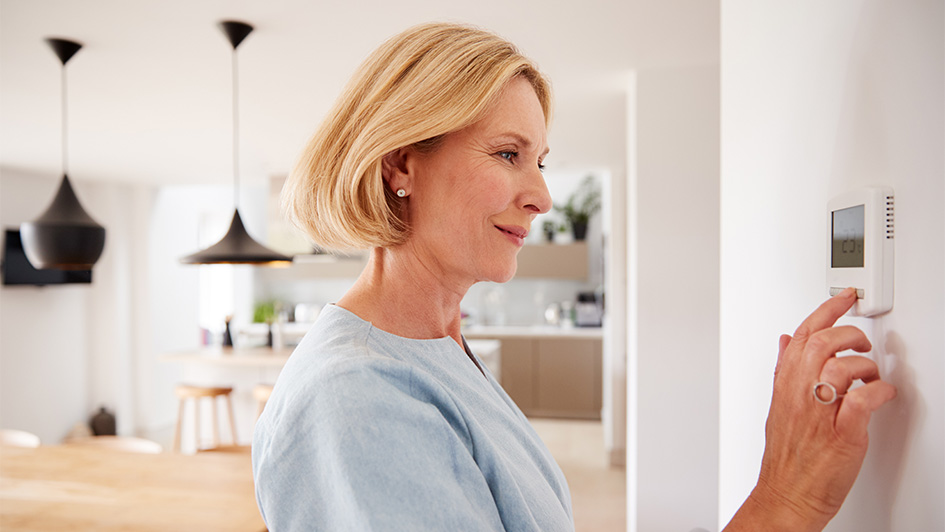
The hot and humid summers in North Charleston, South Carolina, can get muggy and uncomfortable. You adjust the thermostat to a pleasant temperature. The air conditioner starts up automatically. But, even after your cooling system cycles, your home still feels moist and clammy.
Now, you’re cool and damp.
It can be disappointing when the air conditioner appears to work properly, yet your home doesn't actually feel comfortable. If your rooms feel humid but thermostat says cool, you're not alone. It happens a lot.
Why? Temperature and humidity are two different things. Your temperature only tells you how comfortable the air is within your home. It doesn't measure how much moisture is in the air. When indoor moisture is very high, your home can feel warmer than the thermostat indicates, due to indoor humidity problems.
In this guide, you'll learn how humidity affects your indoor comfort levels, common reasons your home feels humid even when the temperature is comfortable and basic troubleshooting steps you can try to reduce humidity in your North Charleston, South Carolina, home. That way, you’ll know when to contact experts like the team at Olde Towne Heating & Air for expert assistance.
Why Your Home Can Feel Humid Even When the Temperature Is Right
Your home's temperature is only part of what makes your house comfortable. Humidity is an extremely important factor. Most homes are generally more comfortable when indoor relative humidity stays between 30% and 50%. When a home has high indoor humidity, the air feels warmer, heavier and stickier—even if the actual air temperature is cool.
Too much indoor moisture can also promote dangerous mold growth, mildew, musty odors and other indoor air quality issues. That's why your house feels humid but the AC is running—your system may be cooling the air without extracting enough moisture.
Reasons Your Home Feels Humid Even with the AC Running
Making your home in North Charleston, South Carolina, high humidity can be a challenge.
Countless area homeowners wonder the same question: What's making my house feel humid?
There are several common causes. Identifying what's creating high idoor humidity is a good first step toward fixing the problem.
Let's look at several common reasons for elevated indoor humidity in North Charleston, South Carolina:
1. Oversized Air Conditioner
An AC that's bigger than your home needs lowers the temperature in your home too quickly. The problem is an oversized AC often doesn’t reduce humidity effectively because it turns off before completing a complete cooling cycle.
2. Clogged Air Filter
A blocked air filter restricts airflow throughout your heting and cooling system. This makes it more difficult for your equipment to control humidity while cooling your home.
3. Obstructed Condensate Drain
Your air conditioner removes moisture from your home’s air and that excess water drains from the unit through a condensate line. If that drain becomes clogged, moisture can't drain from the system properly, contributing to increased humidity levels.
4. Frozen Evaporator Coil
The evaporator coil removes both heat and moisture from your home's indoor air. Ice formation or excessive dirt on the coil reduces its effectiveness and often requires professional AC repair services to fix.
5. Damaged Ductwork
Ductwork transports cool air throughout your home. Gaps in ductwork can pull warm, humid air from attics, crawl spaces or other unused areas into your HVAC system. This additional moisture makes it harder to maintain comfortable humidity throughout your home.
6. Thermostat Fan Set to “On” Change to “Auto”
If your thermostat fan is set to "On" instead of "Auto", the blower continues to operate after the cooling cycle completes. This can push moisture collected on the evaporator coil back into your home instead of letting it to drain away.
7. Unusually Humid Weather
During the area’s very humid summers, your HVAC system has to run longer to remove moisture from the air. Even when your cooling system is functioning as designed, sometimes your home feels muggy because outdoor humidity continues to seep into your home through doors, windows and normal air leakage.
8. Aging Heating and Cooling Equipment
As HVAC systems age, they often become less effective at controlling humidity. HVAC maintenance optimizes performance, improves efficiency and helps detect worn-out parts. Skipping regular air conditioning maintenance can reduce performance, including your system's ability to reduce moisture.
What You Can Check Before Scheduling an HVAC Technician
If your home feels humid, there are several simple things you can check before booking service. These strategies are easy ways to improve indoor comfort by helping your HVAC system remove moisture more effectively.
- Replace or inspect the air filter. A clean heating and cooling system air filter allows proper airflow, helping your system circulate air through and dehumidify your home effectively.
- Make sure the thermostat fan is set to Auto. This allows moisture to flow out after each cooling cycle instead of being blown back into your living spaces.
- Make sure supply and return vents are open and unblocked. Furniture over the vents or closed vents can limit airflow throughout your home.
- Check for water around the indoor unit. Water near your AC equipment may indicate a clogged condensate drain or another drain problem.
- Know how your air conditioning should run. If the AC is short cycling or turning on and off frequently, or it seems to run constantly without cooling your home, it's time to have the system checked by a professional.
Even if your thermostat still says cool but house feels humid, do not perform repairs with refrigerant, electrical components or internal parts. DIY repairs may be tempting, but these repairs require advanced training and should always be performed by a qualified HVAC technician.
Should You Get a Whole-Home Dehumidifier?
If you deal with humidity in your house during summer or year-round moisture problems, a whole-home dehumidifier may be worth considering. As opposed to portable units that only work in one room or area, a whole-home dehumidifier works with your HVAC system to reduce humidity throughout your entire house.
Just one of Olde Towne Heating & Air's indoor air quality solutions, a whole-home dehumidifier helps keep your home more comfortable while helping reduce the risk of mold, musty odors and excess moisture. It can be a great choice for homes in humid areas or properties that struggle with humidity even with a properly functioning AC.
When It's Time to Schedule HVAC Service
Ongoing HVAC humidity issues often are caused by an underlying problem that requires professional repair. The technicians at Olde Towne Heating & Air will check refrigerant charge, airflow, blower performance and evaporator coils to identify why your system isn't controlling humidity effectively. They can also check ductwork, condensate drainage and overall system sizing to find the root cause.
We also can get you scheduled for an HVAC tune-up. Routine seasonal tune-ups help catch small problems before they become major breakdowns. That's why Olde Towne Heating & Air offers an HVAC maintenance plan that makes regular inspections easy and affordable.
If basic troubleshooting doesn't solve the home’s humidity issues, trust Olde Towne Heating & Air for dependable HVAC service in North Charleston, South Carolina.
Schedule HVAC service online or call 843-806-2049 today to take care of high indoor humidity issues for good.